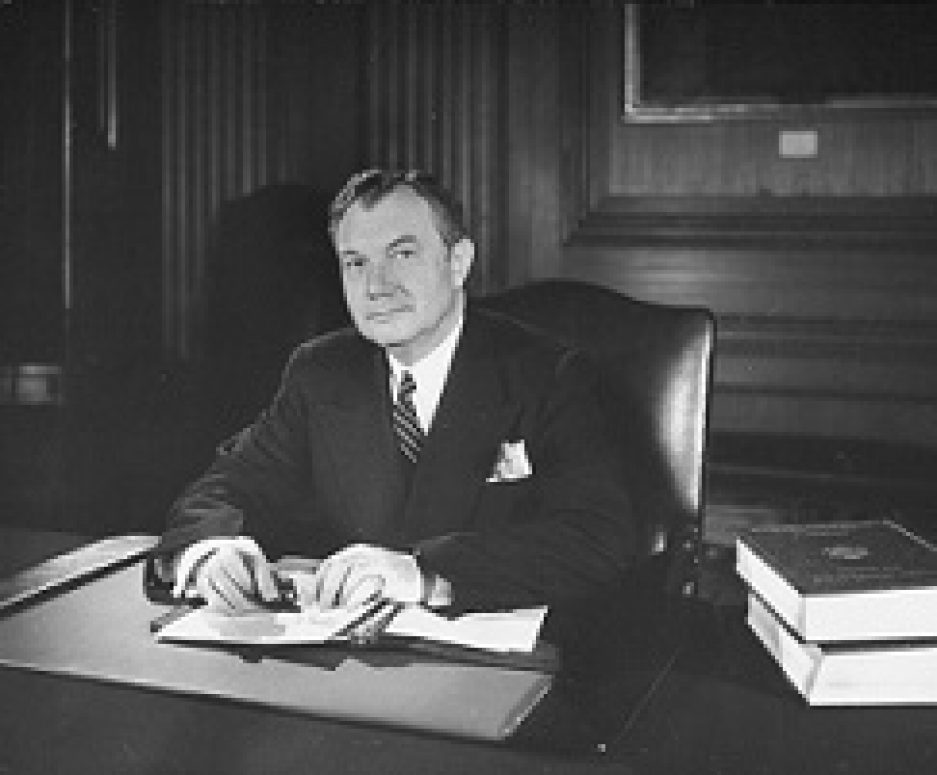
Harlan Fiske Stone was a New Hampshire native who became a New York City lawyer. In 1898, he began to teach at Columbia University’s law school. He served as its Dean from 1910-1923. In 1924, he was appointed United State Attorney General. In 1925, he was appointed an Associate Justice of the U.S. Supreme Court. In 1941, he was appointed Chief Justice of the United States.
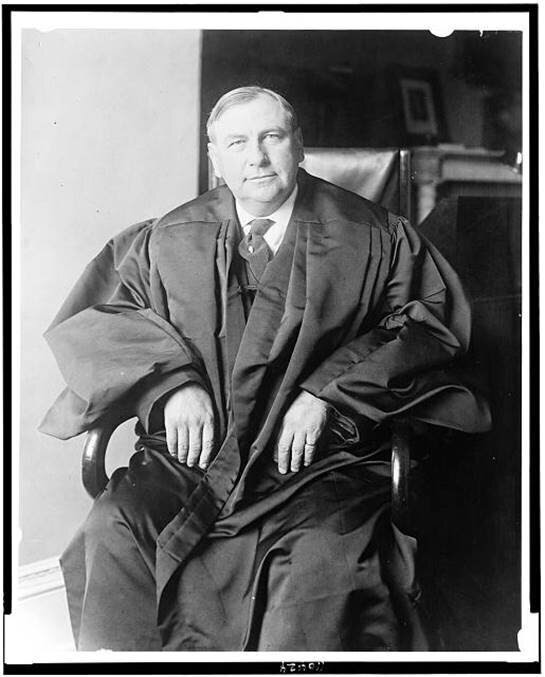
Nearly five years later, on Monday, April 22, 1946—eighty years ago today—Chief Justice Stone, age 73, went to the Supreme Court building to preside at the Court’s April session; it had been adjourned for the previous three weeks. He was in a good mood and appeared to be in good health.
The Justices took the bench at noon. They were only eight. And Justice Harold H. Burton, the junior justice, was still a rookie—he had been commissioned just before the Court term had begun the previous October.
Justice Robert H. Jackson was absent, as he had been for the whole term. He was serving as U.S. chief prosecutor in Nuremberg of Nazi war criminals.
On that April 22, after the Justices took the bench at noon, Chief Justice Stone admitted dozens of attorneys to practice before the Court.
He then announced with regret the recent death of the widow of the late Justice George Sutherland.
Stone then listened to Justice Wiley Rutledge read his opinion for the Court in a first case, Seas Shipping Company v. Sieracki. Stone then read his dissent therefrom.
Chief Justice Stone listened to Justice William O. Douglas read his opinion for the Court in a second case, Girouard v. United States. Then Stone read his dissent from it.
Chief Justice Stone then listened as colleagues read opinions in five other cases.
Shortly before the Justices were to recess for lunch at 2:00 p.m., after Justice Stanley Reed had finished reading an opinion, Chief Justice Stone was visibly stricken with a health problem. He first sat silent, fingering papers in front of him. Then he muttered something about a case being stayed.
The Justices abruptly rose to recess. Chief Justice Stone left the bench walking, on the arms of Justice Hugo L. Black and Justice Reed, who sat on the bench next to the Chief Justice.
The Chief Justice was taken to his nearby chambers. A doctor was called, and he diagnosed the problem as indigestion.
The Court’s marshal, Thomas E. Waggaman, communicated that to Justice Black, the senior Associate Justice.
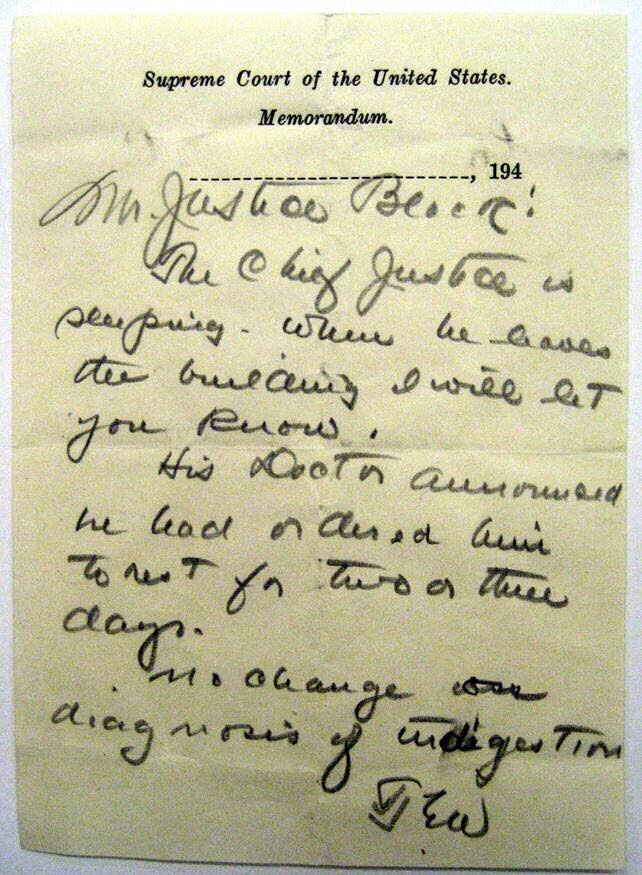
At 2:30 p.m., the seven Associate Justices returned to the bench. Justice Black presided.
The Court announced four more decisions. Justice Black announced three that had been written by Chief Justice Stone.
During this session, Stone’s law clerk Eugene Nickerson sent a note to Justice Black on the bench, advising him that Chief Justice Stone “seems fine” and had been transported, by ambulance, to his home in northwest Washington.
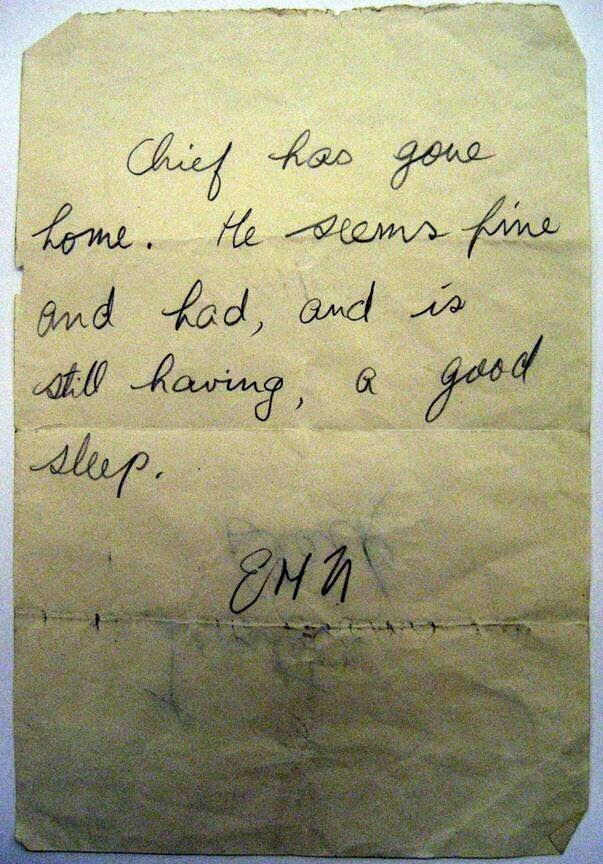
Chief Justice Stone was not fine. He never awakened. He died at 6:45 p.m. The cause was reported to be a cerebral hemorrhage.
The next day, in Nuremberg, Justice Jackson learned of Stone’s death.
They had been acquainted and then friends from Jackson’s 1934 arrival in Washington until he joined the Court in 1941, filling Stone’s associate justice seat as he became Chief Justice. Then they were compatible, even close, colleagues.
Yes, Chief Justice Stone had been irked in May 1945 to learn that Jackson had, without consulting Stone, accepted President Truman’s request to serve as U.S. chief prosecutor of the principal Nazi war criminals.
Into early 1946, as Jackson’s absence became prolonged and the Court privately was dividing 4-4 in many cases, Stone was unhappy about the situation.
But Stone and Jackson stayed in contact. Stone instructed Jackson that winter to stay put in Nuremberg until his work there was done. They were, at the time of Stone’s death, on good terms.
In Nuremberg on the afternoon of April 23, 1946, International Military Tribunal chief judge Geoffrey Lawrence of the United Kingdom announced Chief Justice Stone’s death.
Lord Lawrence then asked Justice Jackson if he would like to speak. He did, and he extemporaneously paid this tribute to his late colleague:
May it please the Tribunal:
It is not only because he was the head of the judicial system of the United States that the news of the passing of Chief Justice Stone brings sadness to every American heart in Nuremberg, but because he was the personal friend of so many of us. He had a rare capacity for personal friendship. No one was more kind to, and thoughtful of, the younger men who from time to time came to Washington, and they found in him a guide, philosopher, and friend.
Now, I know that not only do I feel the loss of a personal friend but that the American representatives on the Tribunal, Mr. [Francis] Biddle and Judge [John J.] Parker, feel the same way, and many of the younger men on the staff had intimate contact with the Chief Justice which you might not expect if you had not known Harlan Stone.
As Attorney General he took over the Department of Justice at one of its most difficult periods and imparted to it the impress of his integrity, an impress which stayed with it and was traditional in the Department, as we well know.
As a Justice of the Court he was a forward-looking man, open-minded, always patient to hear the arguments of both sides and to arrive at his decision with that complete disinterestedness and detachment which is characteristic of the just judge. He presided with great fairness and with kindness to his associates and to those who appeared before him.
It is the passing of a man who exemplified in public life those sturdy qualities which we have come to associate with the New Englander.
The consolation of his friends lies in this: He died exactly as he would have chosen to die, in full possession of his faculties and in the discharge of his duties.
I express great appreciation that this Tribunal has seen fit to take note of his passing and to allow us to record on behalf of the American Bar our appreciation of his talents and character.
