On November 1, the Supreme Court of the United States heard oral arguments in two cases concerning the ability of litigants to bring constitutional challenges to Texas’s anti-abortion law, SB-8. The law effectively outlaws a woman obtaining an abortion after she has been pregnant for only a few weeks. The law also provides that in the event of such an abortion, any person may sue in any Texas state court and obtain an award at least $10,000 against each person who was involved in aiding the woman.
The U.S. Supreme Court decided to hear these cases without waiting for their full adjudication in lower courts. At the requests of Texas abortion providers and the U.S. Department of Justice, the Court reached “down” into the federal court system and took the cases away from the U.S. Court of Appeals for the Fifth Circuit.
The cases were on appeal to the Fifth Circuit from federal district court judgments. In a typical case, the Fifth Circuit would make a final decision, and only then would a losing party petition the Supreme Court to review that judgment. In these cases, the Supreme Court decided on October 22, at the requests of abortion providers and DOJ, respectively, not to wait for the Fifth Circuit, but instead to grant petitions for writs of certiorari before judgment—petitions asking the Court to take these cases now. And the Court granted those petitions.
When the Court decided to take the cases, it put them on a very accelerated schedule for briefing and oral arguments. Many briefs, by parties and interested non-parties, were filed on October 27. They also filed reply briefs on October 29.
On Monday, November 1, the Court heard, in the two cases, over three hours of oral arguments.
Last Friday, November 5, the Justices met in their private conference and, presumably, discussed the cases and voted. One of the Justices now is drafting an opinion for the Court—for a majority of the Justices, or perhaps for all nine of them. If any Justice is in dissent, he or she might be drafting an opinion explaining that vote. And perhaps Justices who are in the majority are drafting concurring opinions, explaining their individual views.
When the opinion-drafting, reading, comments, edits, recirculations, more comments, and so forth are done, the Court will announce publicly its decision and release its written opinions.
That could happen soon—the Court’s next regularly-scheduled day on which to issue orders, plus any decisions that are ready to hand down, is next Monday, November 15.
* * *
The Court’s handling of the Texas SB-8 cases resembles its Spring 1952 action in the “Steel Seizure” cases, Youngstown Sheet & Tube Company v. Sawyer and its companion cases.
Those cases began when President Harry Truman faced a breakdown in U.S. steel industry contract bargaining. A steel industry labor strike or lockout by management was imminent. Either would have shut down steel production.
President Truman decided that a steel industry shutdown would be unacceptable to U.S. national security, because steel was essential to both the ongoing Korean War and to the U.S.-U.S.S.R. nuclear arms race. So on April 8, 1952, the President ordered Secretary of Commerce Charles Sawyer to take over the mills—to seize them by government edict and keep them running.
The steel companies sued Sawyer in federal court in the District of Columbia. They argued that President Truman and the U.S. government had no constitutional or statutory authority to seize and run the steel mills.
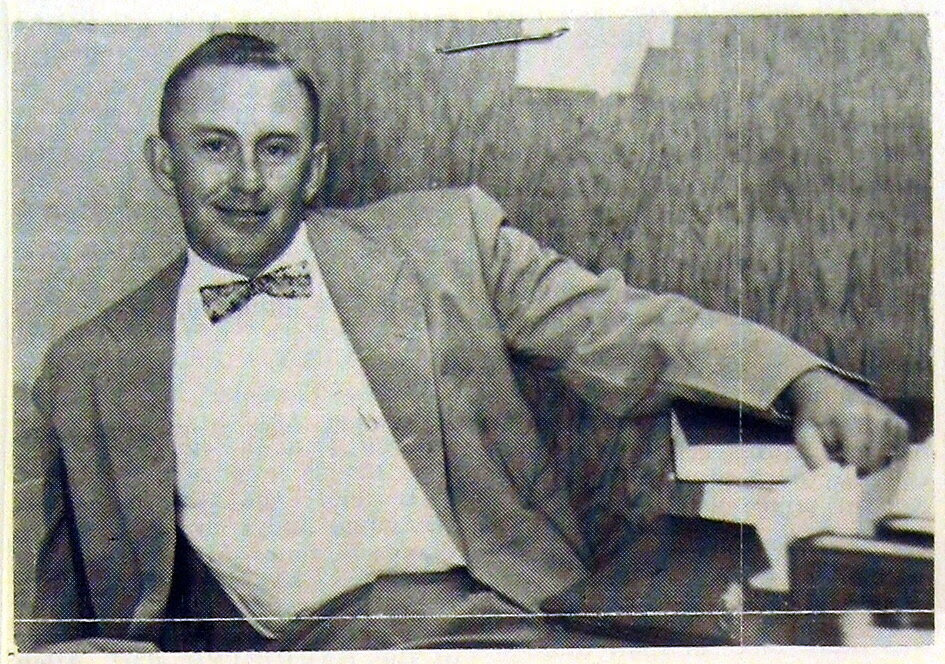
After hearing vigorous oral arguments, including by the U.S. Department of Justice defending the President’s action, a federal district judge ruled against him—on April 30, the Judge, David A. Pine, issued a preliminary injunction ending the seizure and returning the mills to control of their owners. The government asked Judge Pine to stay this order but he declined to do so.
Later that same day, the government moved up to the appellate court. The DOJ asked the U.S. Court of Appeals for the District of Columbia to stay the district court order. DOJ announced that it would be asking the Supreme Court to grant certiorari before judgment and wanted the Court of Appeals to in effect continue the steel mill seizure until the Supreme Court could consider that petition. After hearing oral argument, the Court of Appeals granted the stay.
The parties then asked the Supreme Court to take the cases—to grant petitions for writs of certiorari before judgment.
On Saturday, May 3, the Court granted those petitions. It set the cases for oral arguments beginning on Monday, May 12. The arguments filled much of that day and the next.
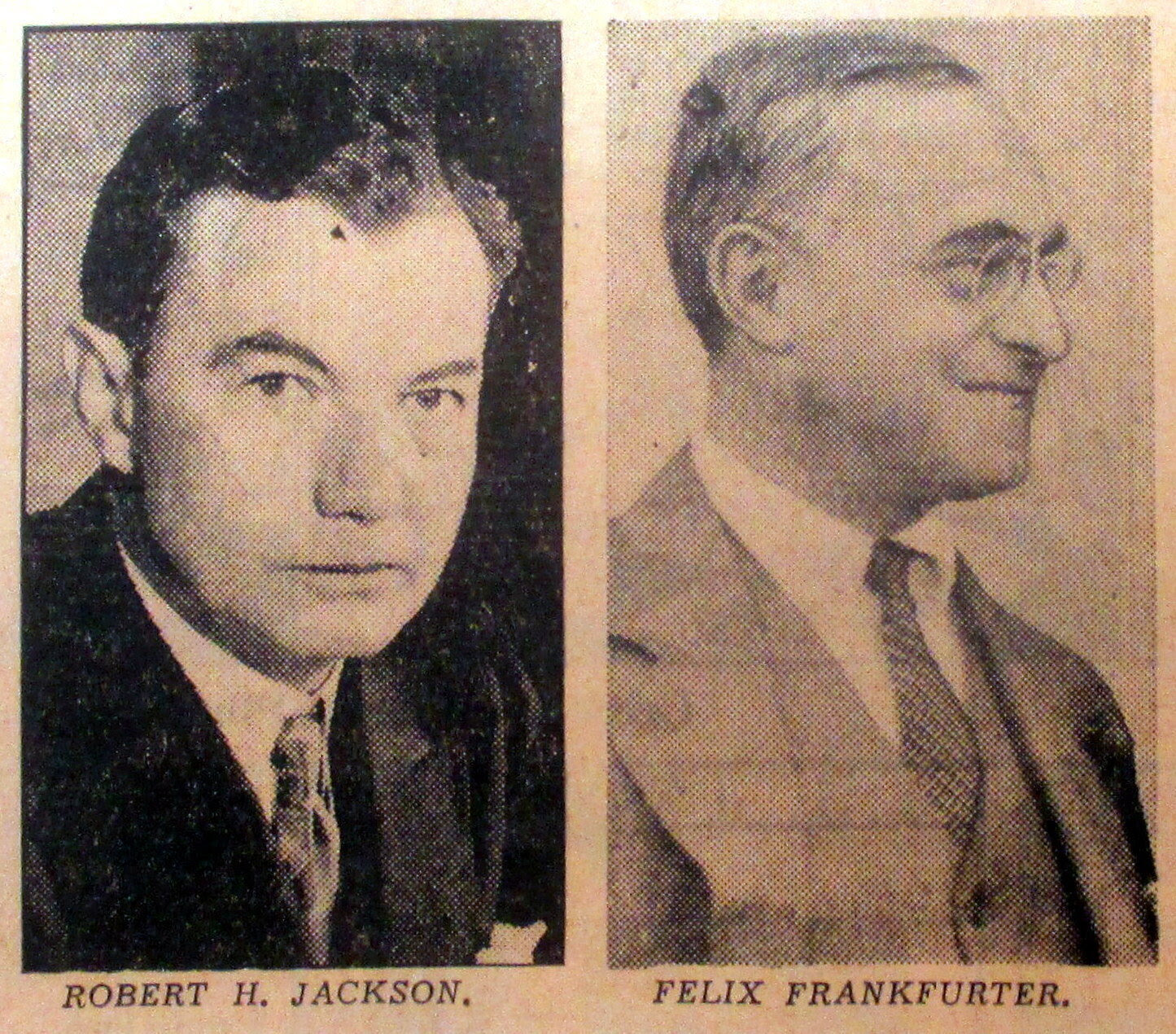
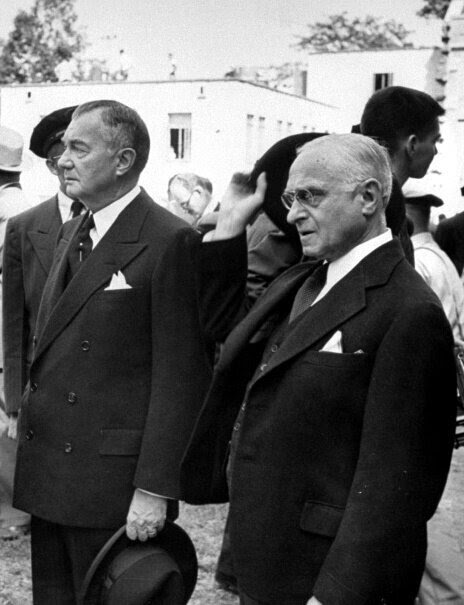
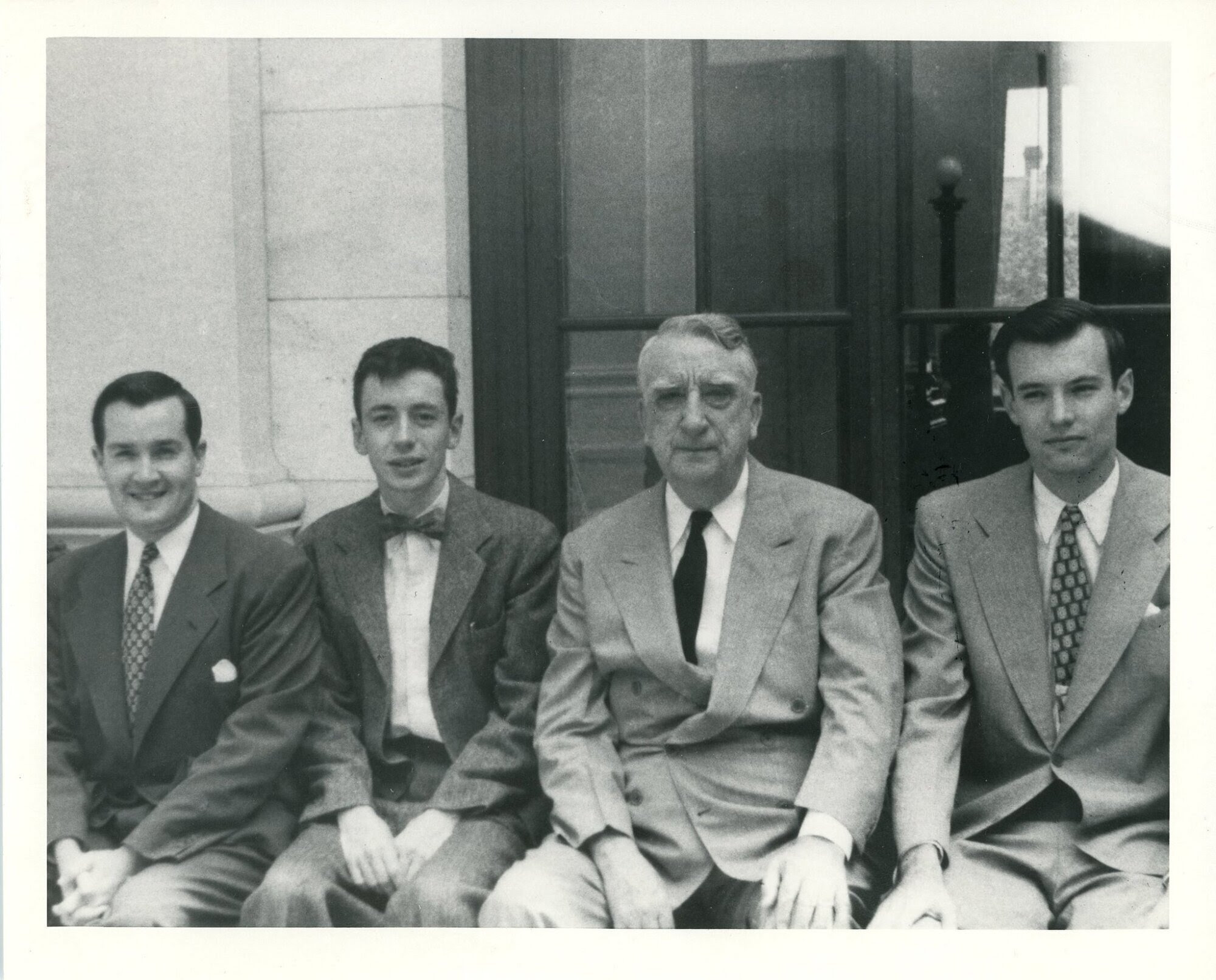
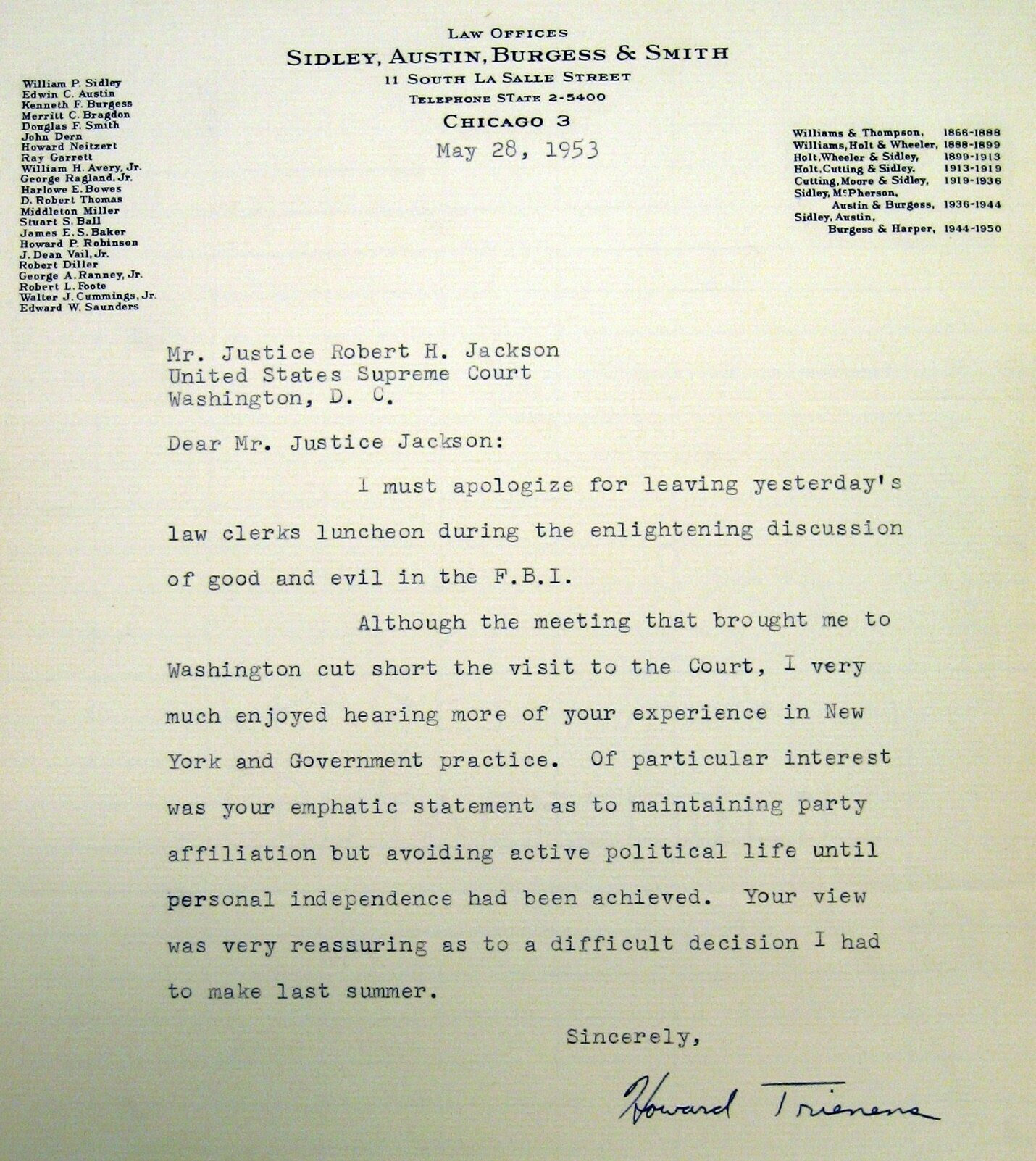
On Friday, May 16, the Justices met privately in conference, discussed the cases, and voted. By a vote of 6-3, they decided that they would affirm Judge Pine’s order enjoining the government’s seizure of the steel industry. (When Justice Robert H. Jackson returned to his chambers after that conference, he found his law clerks, George Niebank and Bill Rehnquist, waiting eagerly to hear what had been decided. “Well, boys,” Jackson told them, “the President got licked.”)
The Justices spent the next two weeks drafting opinions in the case.
On Monday, June 2, they took the bench. They skipped over what typically came first, admitting attorneys to practice before the Court. Instead, Justice Hugo L. Black, the senior Justice in the majority, announced the Youngstown decision and read his opinion for the Court.
Each of the five Justices who voted with Justice Black also filed and read from or summarized his individual opinion:
- Justice Felix Frankfurter, concurring;
- Justice William O. Douglas, concurring;
- Justice Jackson, concurring in the judgment and in the Court’s opinion;
- Justice Harold H. Burton, concurring in the Court’s opinion and judgment; and
- Justice Tom C. Clark, concurring in the Court’s judgment.
Chief Justice Fred M. Vinson then read his dissenting opinion, in which Justices Stanley Reed and Sherman Minton joined. Vinson alone spoke for about an hour.
All told, the Justices took over two and one-half hours to announce this decision.
The steel seizure had been adjudicated in full and found to be unconstitutional in less than two months.
The Justices took three weeks from the start of oral arguments to hand down their decision.
The Justices wrote their lengthy, powerful, and necessary opinions during the two weeks between their conference and their decision day.
The Court’s Youngstown performance is, in its speed, its seriousness about very significant constitutional issues, and its outcome, rightly regarded as one of its great moments.
* * *
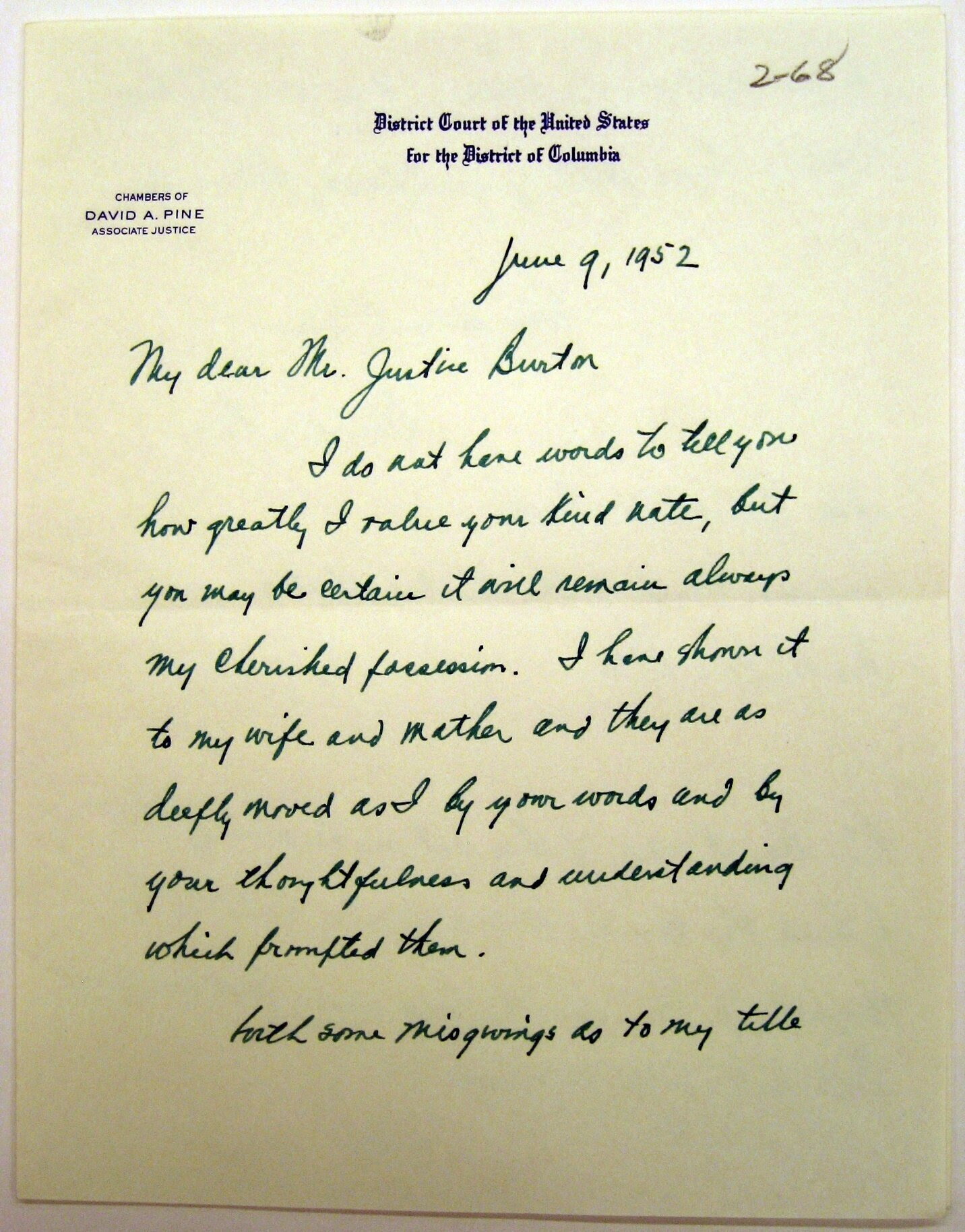
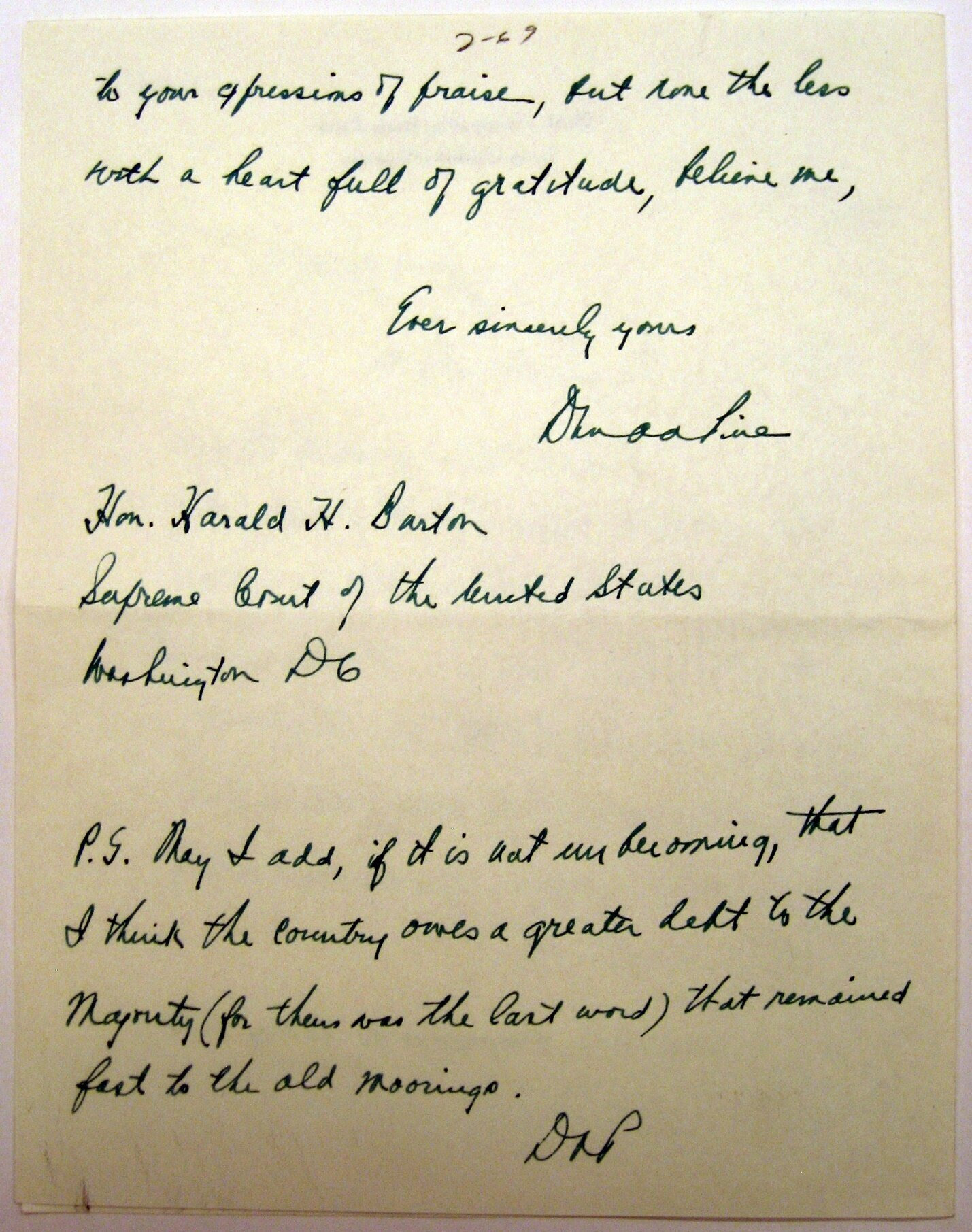
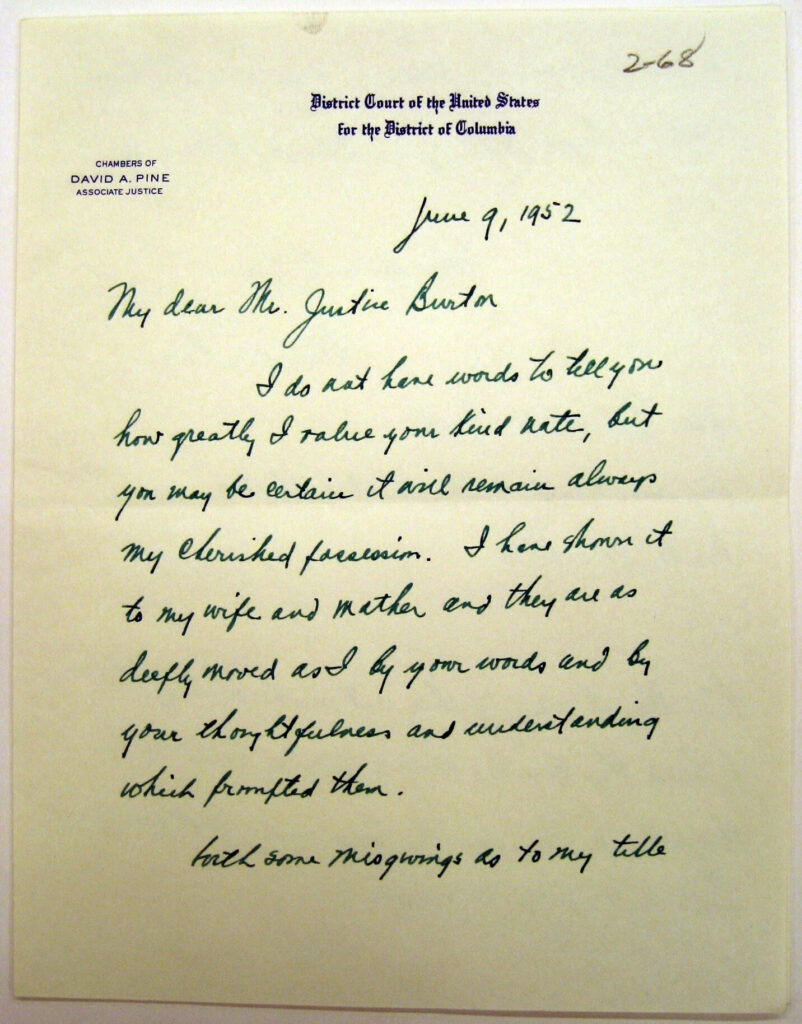
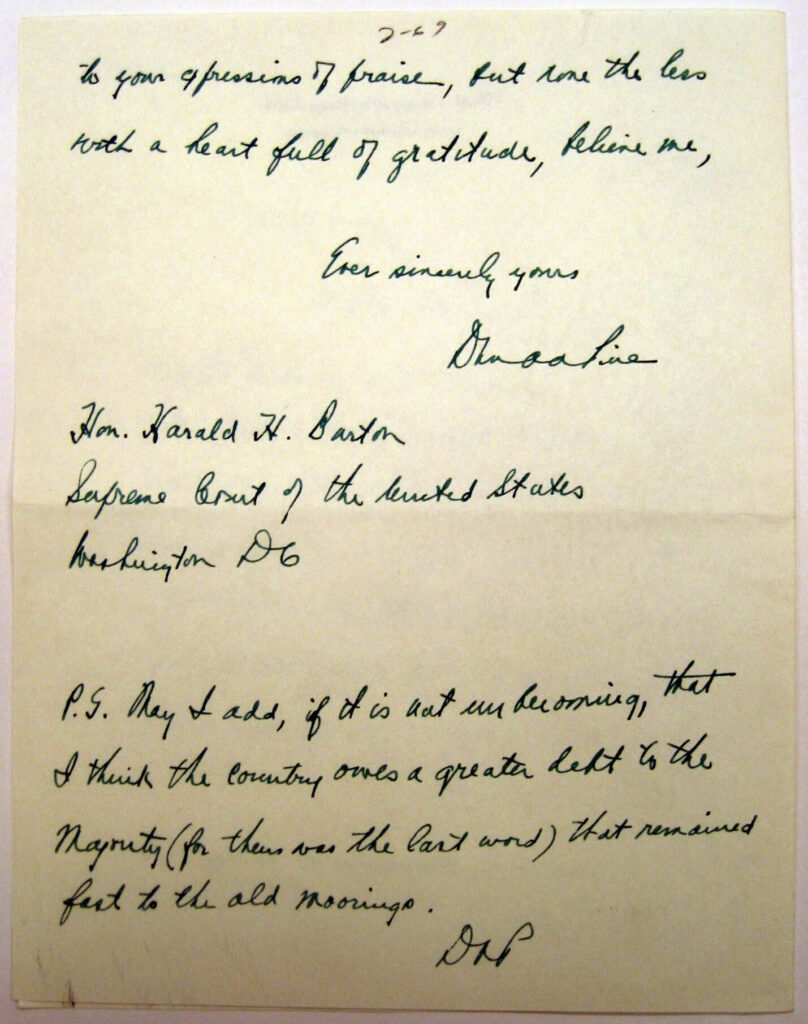
When the litigation was done, Justice Burton sent a note to Judge Pine, complimenting him on his judging at the start of the case.
Judge Pine, writing back, complimented the Supreme Court majority for “remain[ing] fast to the old moorings.”
 Here’s hoping that in today’s Texas cases, the Justices are working toward such prompt, functional, law-abiding, law-advancing, and moored—fast—decisions.