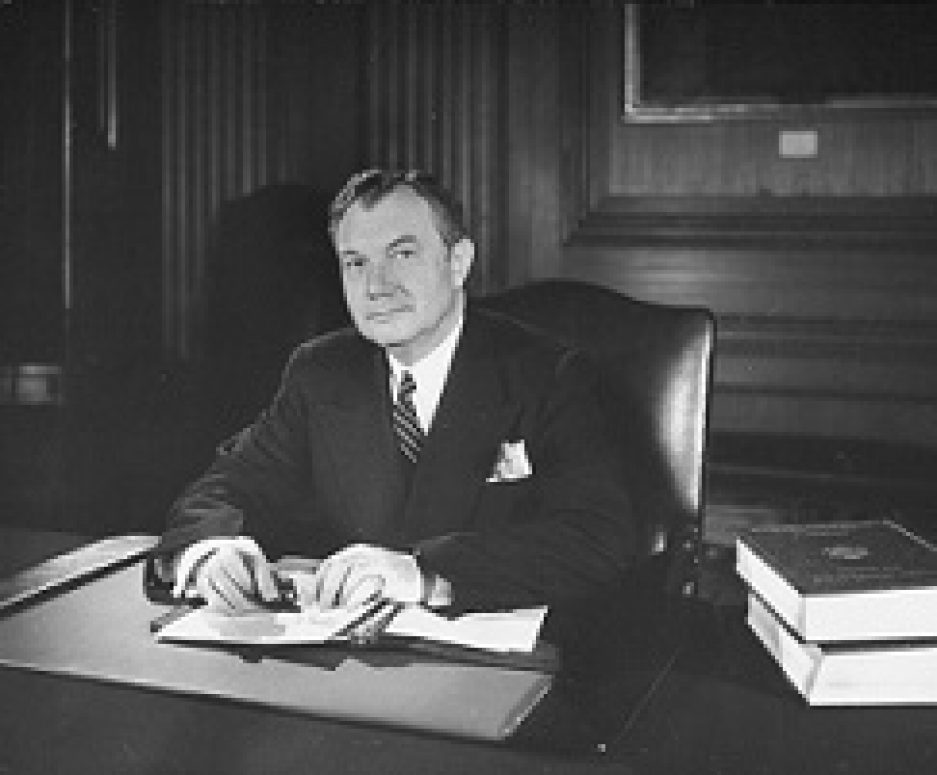
In late August 1939, Robert H. Jackson, the Solicitor General of the United States, drove from Washington, D.C., with his wife and daughter to their former hometown, Jamestown, New York. They planned to stay through the first week of September, visiting Jackson’s mother and other family and friends.
But on Thursday, August 31, General Edwin M. (“Pa”) Watson, President Franklin D. Roosevelt’s appointments secretary, telephoned Jackson in Jamestown and changed his plans.
Watson said that the President was in the mood for a social evening with a few friends, a chance to forget about the growing threat of war in Europe, and that it was being arranged for Saturday night, September 2. Watson said the President wanted Jackson to attend.
Jackson left Jamestown the next evening, Friday, September 1.
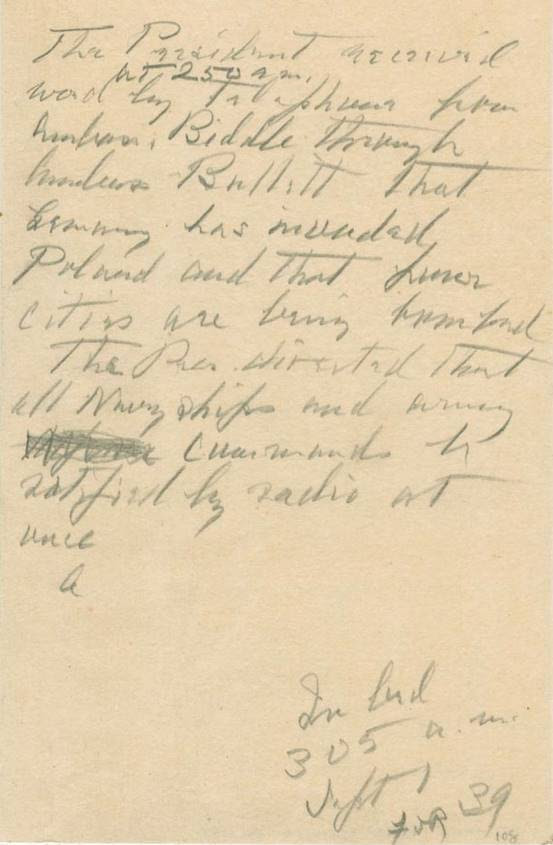
Earlier that morning, President Roosevelt had been informed that Nazi Germany had invaded Poland. This is the note that he scrawled after he was awakened to take a telephone call with that news:
Jackson, driving alone and through the night, reached Washington the next morning, Saturday, September 2.
During that day, he met at the U.S. Department of Justice with his immediate boss, Attorney General Frank Murphy.
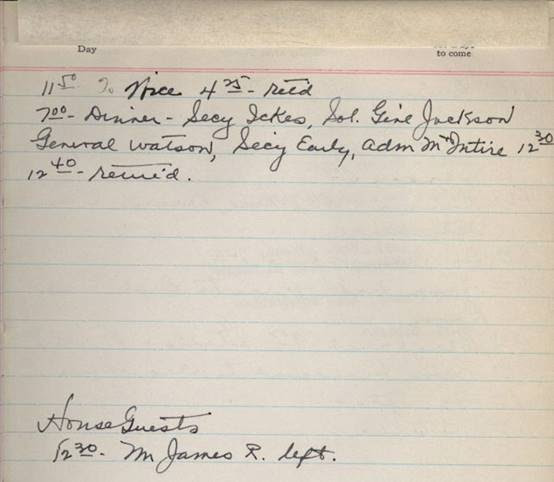
That evening, Jackson went to the White House around 6:45 p.m.
President Roosevelt had assembled five guests. He greeted them in his second-floor study. (It then was called “the Oval Room;” today it is called “the Yellow Oval Room.”) In addition to Jackson, the guests were “Pa” Watson; Harold L. Ickes, the Secretary of the Interior; Stephen T. Early, the President’s press secretary; and Dr. Ross T. McIntire, M.D., a U.S. Navy admiral and the President’s physician.
The President mixed cocktails for the group. They enjoyed the drinks, talked and were able to have some laughs, including over a note that William O. Douglas, Roosevelt’s former Securities and Exchange Commission chairman and his Supreme Court appointee of a few months earlier, had sent.
Justice Douglas had been invited that evening but was not able to attend. He referred in his note to the Chief Justice of the United States, Charles Evans Hughes, as “Charles the Baptist.” This was a favorite Roosevelt nickname for Hughes, who at earlier times had been something of the President’s antagonist and probably never was his guest at an informal White House gathering.
After cocktails, the group went to the White House family quarters for a simple dinner. Although the war situation in Europe was not discussed much, the President did tell his guests that he was in constant telephone contact with the U.S. Ambassadors in Paris and London, William C. Bullitt and Joseph P. Kennedy, respectively, and that their reports were ominous.
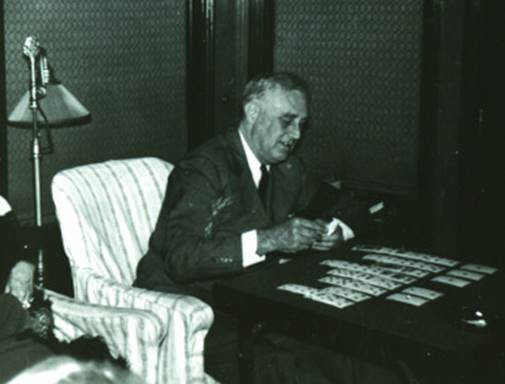
After dinner, the group returned to the President’s study and played poker.
Admiral McIntire, watching out for the President’s health, announced that the card playing would stop at 11:00 p.m. President Roosevelt objected and—being the President—he received permission for play to continue until 11:45.
In the heat and fun of the poker playing, the group forgot, at times, the looming war. Jackson saw that the President actually relaxed.
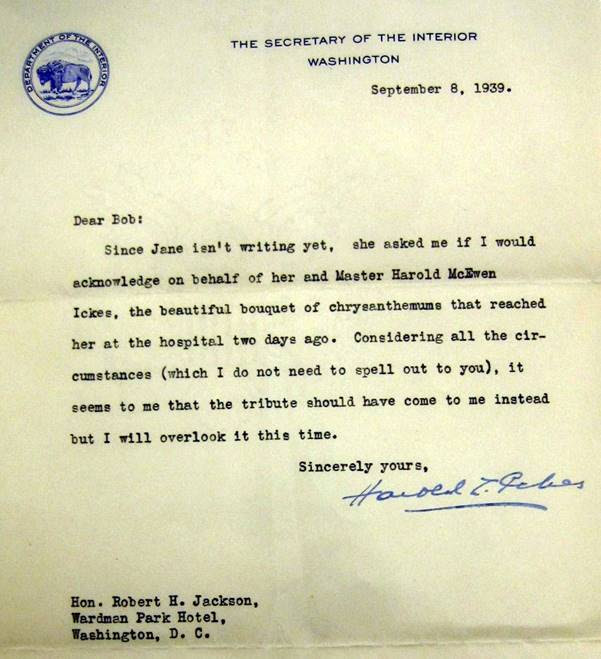
Roosevelt’s usual good luck at cards was not with him that night. The big winner was Ickes. He announced that he now could afford to have a baby, which his wife did two days later.
Around 10:00 p.m., the State Department delivered to the President a message from Ambassador Kennedy. After reading the cable, the President said sadly, “Gentlemen, by noon tomorrow, war will have been declared.”
That was the case. On September 3, Poland’s allies France and the United Kingdom declared war on Germany.
* * *