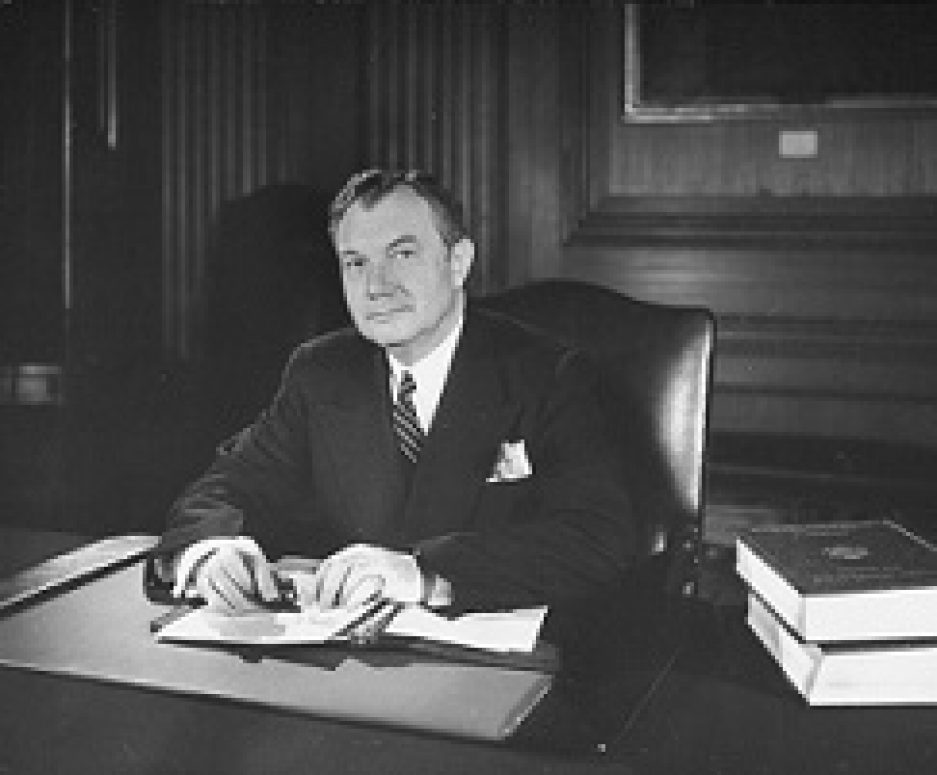
Last month, as in many previous summers, I had the opportunity to teach in Europe in Creighton University’s program “From Nuremberg to The Hague (N2H).”
Early in the program, a U.S. law student, Alannah Lockitt, told me that she had a podcast and wanted to interview me about Justice Robert H. Jackson and the 1945-1946 Nuremberg trial.
A few days later, when we were in Nuremberg, Germany, I gave a classroom lecture on Jackson and Nuremberg.
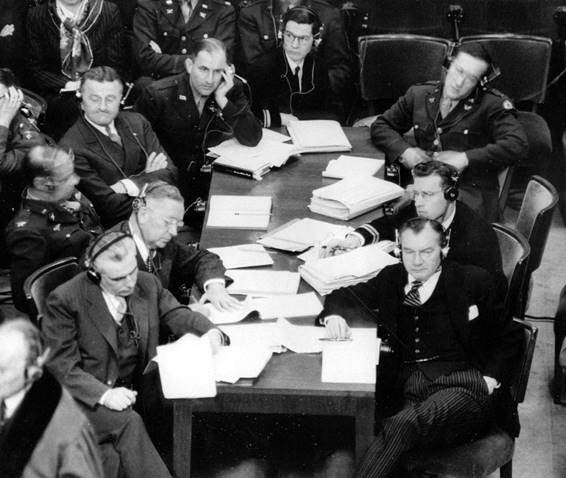
Ms. Lockitt then interviewed me for about twenty-five minutes, about topics including:
- why Robert Jackson was chosen to be the U.S. chief prosecutor of Nazi war criminals following World War II;
- why I am interested in Jackson;
- Jackson’s book That Man, his memoir of President Franklin D. Roosevelt that also is very autobiographical;
- Jackson’s candor about himself, including his career ambitions;
- before Nuremberg, the existence of international law but the absence of an international criminal law process to hold violators accountable;
- the significance of Nuremberg trial evidence;
- 1945 as an unusual moment of international consensus and power;
- what Robert Jackson would think of today’s International Criminal Court;
- how Jackson and his team members felt about each other;
- some of Jackson’s characteristics;
- the 2025 movie, “Nuremberg;” and
- seeing the personal choices that pervade laws and legal systems.
With thanks to Alannah Lockitt, here is the clickable link to her podcast video on YouTube:
